
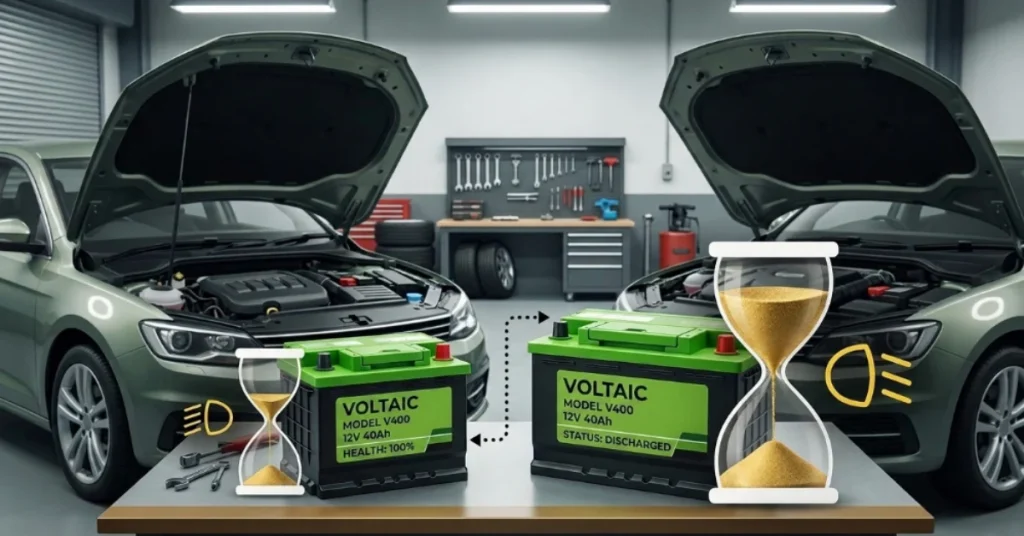
Your car battery does much more than start the engine. It also powers many electrical systems that you use every day. Knowing what the Ah rating means can help you choose the right battery and avoid common battery problems.
Ah stands for Ampere-hour, and it measures how much electrical energy a battery can store and supply over time. You can think of it as the battery’s fuel tank. A higher Ah rating means the battery can power electrical accessories for a longer period before it becomes discharged.
However, the correct battery is not always the one with the highest Ah rating. It should always match your vehicle manufacturer’s recommended specifications.
What Is an Ampere-hour (Ah) Rating?
An Ampere-hour, commonly written as Ah, is a unit that measures the battery’s storage capacity. It tells you how much electrical current a battery can provide over a certain amount of time before it needs to be recharged.
Battery manufacturers test this capacity using a standard 20-hour discharge rate, making it easier to compare different batteries fairly. A battery with a larger Ah rating stores more electrical energy than one with a smaller rating.
This rating is one of the most important specifications to check when selecting a replacement battery for your vehicle.
How Does the Ah Rating Work?
The Ah rating follows a simple calculation based on current and time. For example, a 60Ah battery can theoretically provide 3 amps of current for 20 hours because 3 × 20 equals 60.
Likewise, a 45Ah battery can supply about 2.25 amps for 20 hours. In real driving conditions, battery performance changes due to temperature, driving habits, battery age, and electrical load.
Even so, the Ah rating remains a useful way to understand the battery’s overall energy storage capacity and endurance.
Why Is the Ah Rating Important in Amaron Batteries?
The Ah rating determines how long your battery can support your vehicle’s electrical systems. Modern cars have many electronic components, including infotainment systems, LED lighting, parking sensors, cameras, GPS units, USB charging ports, and security systems.
These accessories continue to use small amounts of electricity even after the engine is switched off. A battery with the correct capacity can support these systems without becoming discharged too quickly.
Choosing the right capacity also helps maintain stable voltage and supports reliable daily operation.
Difference Between Ah and Cold Cranking Amps (CCA)
Many drivers confuse Ah with CCA, but they measure two completely different things. Ah measures how much electrical energy the battery can store and deliver over time. CCA, or Cold Cranking Amps, measures the battery’s ability to provide a large burst of power for starting the engine in cold weather.
One represents endurance, while the other measures starting strength. Both ratings are important because your battery must start the engine while also supplying enough energy for your vehicle’s electrical equipment.
Specification | Ah (Ampere-hour) | CCA (Cold Cranking Amps) |
Measures | Battery capacity | Starting power |
Main Purpose | Powers accessories over time | Starts the engine |
Test Standard | Usually 20-hour discharge | Tested at very low temperatures |
Higher Value Means | Longer electrical endurance | Better engine starting performance |
Important For | Electronics and daily driving | Cold weather engine starting |
Understanding Common Amaron Battery Ah Ratings
Different vehicles require different battery capacities depending on engine size and electrical demand. Choosing the correct capacity helps the charging system work efficiently and improves battery life.
Ah Rating | Suitable Vehicle Type | Typical Usage |
35Ah | Small hatchbacks | Basic electrical systems |
40Ah | Entry-level compact cars | Standard daily driving |
45Ah | Compact hatchbacks and sedans | Light electrical load |
50Ah | Small sedans | Regular family use |
55Ah | Mid-size sedans | Balanced performance |
60Ah | Sedans and compact SUVs | Moderate electronics |
65Ah | Larger sedans and SUVs | Higher accessory usage |
70Ah | SUVs and diesel vehicles | Heavy electrical demand |
74Ah | Premium SUVs and executive cars | Advanced electronics |
75Ah | Large family vehicles | Multiple accessories |
80Ah | Luxury vehicles | High electrical capacity |
90Ah | Premium SUVs and commercial vehicles | Heavy-duty operation |
100Ah | Large diesel vehicles and vans | Maximum electrical demand |
150Ah | Heavy commercial trucks, buses, construction equipment, and industrial vehicles | Very high electrical demand and extended power supply for heavy-duty applications |
Which Ah Rating Is Suitable for Your Vehicle?
The correct battery capacity depends on your vehicle’s electrical requirements, engine size, and manufacturer recommendations. Small hatchbacks with limited electrical equipment usually require batteries between 35Ah and 45Ah.
Family sedans often use batteries ranging from 50Ah to 65Ah because they have additional comfort features and larger engines. SUVs, luxury cars, and diesel vehicles normally require capacities between 70Ah and 100Ah due to their increased electrical demand.
Always follow the battery specification listed in your owner’s manual or printed on the original battery.
Can You Install a Higher Ah Battery?
Many people believe installing a higher Ah battery automatically improves performance. This is only partly true. A battery with a slightly higher capacity may work if it physically fits the battery tray and matches the charging system.
However, installing a battery that is much larger than recommended can create charging problems because the alternator may not fully recharge it during normal driving.
Extra capacity is only useful when the vehicle is designed to support it. Matching the manufacturer’s specifications is always the safest choice.
What Happens If the Ah Rating Is Too Low?
Using a battery with a lower capacity than recommended can create several problems over time. The battery may discharge faster because it cannot meet the electrical demand of the vehicle.
This increases stress on the charging system and may shorten battery life. Drivers may also notice dim headlights, slow engine cranking, warning lights, or electronic systems that stop working properly.
Choosing the correct battery capacity reduces these risks and helps maintain reliable vehicle performance. Some common problems caused by a battery with a low Ah rating include:
- Faster battery discharge
- Reduced battery lifespan
- Increased alternator workload
- Slow engine starting
- Weak performance of electrical accessories
- Voltage drops during heavy electrical use
- Greater risk of unexpected battery failure
Factors That Affect Battery Performance Besides Ah
Battery capacity is only one part of overall battery performance. Several other factors also determine how reliably your battery starts the engine, powers electrical systems, and lasts over time.
- Cold Cranking Amps (CCA): Measures starting power during cold conditions and helps the engine start quickly when temperatures are low.
- Reserve Capacity (RC): Indicates how long the battery can supply electricity if the alternator stops charging unexpectedly.
- Battery Age: Older batteries gradually lose their ability to store electrical energy, reducing overall performance and reliability.
- Operating Temperature: High temperatures accelerate internal wear, while extremely cold weather can temporarily reduce battery efficiency.
- Driving Habits: Frequent short trips prevent the battery from fully recharging, leading to gradual capacity loss over time.
- Battery Maintenance: Clean terminals, secure connections, and regular inspections help improve charging efficiency and extend battery lifespan.
- Charging System Health: A properly functioning alternator ensures the battery receives the correct charging voltage during every drive.
How to Choose the Right Amaron Battery?
Selecting the correct battery starts with checking your vehicle’s recommended specifications. Look at the owner’s manual or the label on the existing battery to confirm the correct Ah rating, CCA, battery size, terminal layout, and polarity.
Also consider your driving habits. If your vehicle has many electrical accessories or frequently operates in stop-and-go traffic, choosing the correct premium battery can improve reliability. Buying from an authorized supplier also helps ensure you receive a genuine battery with warranty support.
Before purchasing a replacement battery, check the following:
- Vehicle make, model, and year
- Petrol or diesel engine
- Recommended Ah rating
- Required CCA rating
- Battery dimensions
- Terminal position
- Warranty coverage
- Manufacturing date
- Genuine product verification
Signs Your Car Battery May Need Replacement
Even a high-quality car battery will eventually reach the end of its service life. Most automotive batteries last between three and five years, depending on driving habits, weather conditions, and regular maintenance.
As the battery ages, it stores less electrical energy and becomes less reliable. Recognizing the early warning signs can help you replace the battery before it leaves you stranded.
Watch for these common signs:
- Slow Engine Cranking: The engine takes longer than usual to start, indicating the battery may be losing its power.
- Battery Warning Light: A battery-shaped warning light on the dashboard may signal charging system or battery issues.
- Dim Headlights: Weak or flickering headlights often indicate the battery is struggling to supply enough electrical power.
- Poor Accessory Performance: Power windows, infotainment systems, and other electronics may operate slower than normal due to low battery power.
- Swollen Battery Case: Excessive heat can cause the battery casing to expand, indicating possible internal damage and reduced performance.
- Frequent Jump Starts: Repeatedly needing a jump start usually means the battery can no longer hold a proper charge.
- Battery Age Over Four Years: Batteries older than four years should be tested regularly, even if they appear to work normally.
Conclusion
Choosing the correct battery capacity is one of the easiest ways to improve your vehicle’s reliability and electrical performance. Understanding Ah ratings in Amaron car batteries helps you select a battery that matches your vehicle instead of simply choosing the largest one.
The Ah rating measures the battery’s energy storage capacity, while CCA measures its starting power. Both specifications work together to deliver dependable performance.
Always follow your vehicle manufacturer’s recommendations and select a genuine replacement battery that meets the correct specifications.
Buy Genuine Amaron Batteries in Sharjah from 800Sayara
If you are looking for a genuine Amaron car battery in Sharjah, 800Sayara offers a wide range of battery options for hatchbacks, sedans, SUVs, luxury cars, and commercial vehicles.
Our experts help you choose the correct Ah rating based on your vehicle’s specifications, ensuring reliable performance and long battery life. We also provide fast battery replacement services across Sharjah, delivering and installing your new battery at your home, office, or roadside so you can get back on the road quickly and safely.


